

Make relevant coupon promotions visible while shoppers browse products.
View on Shopify App Store ↗Why Customers Add Items to Get Free Shipping
Compare the extra spend with the value of an added item, understand possible customer motivations, and test free-shipping messages without hiding the total.
A shopper can dislike a $6 delivery charge yet willingly put a $9 pen into the cart. The larger order is not necessarily cheaper. It may feel more worthwhile because the extra money buys something the shopper expects to use. Understanding that distinction helps merchants explain a free-shipping offer without suggesting that every additional purchase saves money.
The useful question is not simply whether customers like free shipping. Ask what they believe they receive in exchange for the extra spend, whether the item is genuinely wanted, and whether they understand the final total. Different shoppers can answer those questions differently while seeing exactly the same offer.
Start with the delivered total
Consider a hypothetical US stationery order with no other discounts. A notebook bundle costs $44, standard delivery costs $6, and eligible merchandise orders of at least $50 receive free standard shipping. All totals below exclude tax; this is an illustration, not a store's actual offer.
Buying the notebook bundle alone costs $50 before tax: $44 plus $6 delivery. Adding a $9 pen makes the merchandise total $53 and removes the delivery charge. The second basket costs $3 more overall. The customer receives a pen in exchange for that additional $3 of spending compared with the original delivered order.
That comparison does not turn the pen's listed price into $3, and it does not make the pen free. It describes the difference between two complete baskets. If the shopper needs the pen and values it above that difference, choosing the larger basket can make sense. If the pen will sit unused, paying for delivery remains the lower-spend option.
Now replace the pen with a $20 accessory. The delivered total becomes $64, or $14 more than the original $50 basket. The progress message still says that only $6 of merchandise is needed to qualify, but the available product requires a much larger purchase. The remaining threshold gap and the price of the next useful item are separate numbers.
Separate three possible reasons for adding an item
First, the shopper may already intend to buy the extra product soon. Combining two planned purchases can be convenient. Ask whether the addition was on their list before they saw the shipping message; do not assume the promotion created new demand.
Second, the shopper may prefer receiving merchandise to paying a separate delivery fee. Treat this as a hypothesis about perceived value, not a diagnosis of irrationality. Delivery still provides a service even when its benefit is less visible than the product in the parcel.
Third, the word free may attract attention beyond the arithmetic. In his account of zero-price experiments, Dan Ariely describes choices that changed when an option became free. That account provides context for a hypothesis; it does not establish a shipping-threshold conversion rate or prove why an individual customer added a pen. A basket total alone cannot distinguish these explanations.
Learn what the customer thought happened
Use a short, optional question after the buying decision, without obstructing checkout: “What made you add this item?” Let people describe their reason before offering categories. Useful follow-ups include whether they planned to buy it anyway, whether it replaced another planned purchase, and what they expected the final total to be.
For research sessions, present both complete baskets and ask the participant to explain the difference in their own words. If someone says the $53 basket saves $6 compared with the $50 basket, the message has not communicated the spending trade-off clearly. Correct the presentation rather than treating the misunderstanding as successful persuasion.
A Shopify Community threshold discussion includes merchant concerns about people abandoning instead of adding unwanted products. These are individual reports, not controlled evidence of a universal response. They are useful questions to investigate with your own customers.
Make the qualification message precise
For the illustrative basket, “Add $6 in eligible merchandise to qualify for free standard shipping” describes the threshold gap. “Save $6 on delivery” describes the fee avoided. Neither statement means that the shopper's total spending falls by $6 after adding merchandise. Keep the original checkout route easy to use and show the updated total when an item is added or removed.
Eligibility must also match the real promotion. Shopify's free-shipping discount documentation says minimum-purchase calculations use product prices, exclude taxes, and use discounted prices when eligible discounts combine. A visual progress message should not rely on a subtotal that checkout calculates differently. Confirm destination and delivery-service restrictions before saying that shipping is unlocked.
For the operational setup and supplier-cost checks, use our free-shipping guide for dropshipping. This article focuses on the customer's decision between baskets, rather than selecting a profitable threshold.
Test a helpful explanation, not forced additions
Compare the same qualifying offer with two presentations: a clear threshold message alone, and that message alongside an optional, relevant accessory with its price and updated order total. Keep eligibility and product prices identical. Random assignment can help separate the presentation effect from differences in customer intent; a before-and-after comparison remains vulnerable to changing traffic and seasonality.
Record completed purchases as well as accessory additions. Also review removals, returns of added items, support questions about shipping and contribution per eligible visitor. An accessory click is not proof that the shopper understood the total, and higher order value is not proof of higher profit. Allow enough time for returns before judging the outcome.
If your campaign also uses coupons, Eggflow Instant Upsell describes clickable discount banners and product-related coupon promotion. That is a way to communicate an applicable incentive; it does not establish that the app configures your shipping rules or calculates the basket comparison above. Verify the actual checkout behavior and avoid adding another promotion merely to fill a banner.
A good outcome is a customer choosing a useful addition with an accurate understanding of the extra cost. Keep paying for delivery a legitimate, easy choice. Your test should tell you whether the explanation helped customers decide, not merely whether a progress bar encouraged a larger cart.
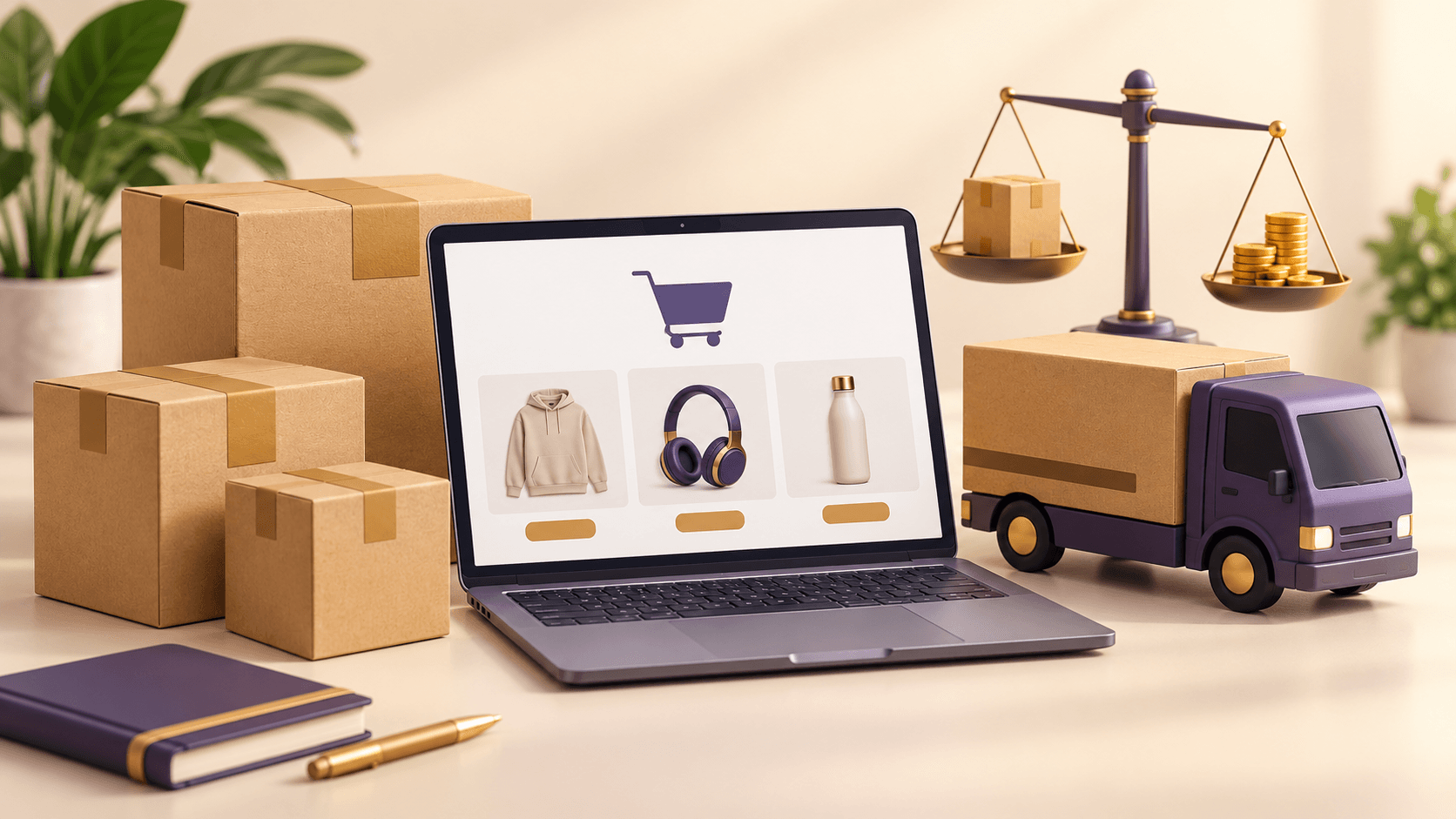
Sources checked November 2, 2026. All basket values are hypothetical. The feature image is a reused editorial illustration of online shopping and delivery costs.
Apps in this guide
Keep exploring
All stories ↗
Eggflow Updates
What’s New in Smart Pop: Redesigned Popups, Link & Display Fixes, and Vendoria.net Integration
Discover what is new in Smart Pop: modernized layouts across all 4 popup and banner types, fixes for display and CTA link redirect issues, and automatic popup rendering on your store and product pages on Vendoria.net.
Conversion Rate Optimization (CRO)
How to Attract New Customers with a Free Dessert Tray Promotion on Shopify
Learn how to set up a free dessert tray promotion for first-time customers on your Shopify store. This guide provides step-by-step instructions to help catering companies attract new customers and…

Conversion Rate Optimization (CRO)
How to Improve Your Online Store's Low Conversion Rate: A Detailed Guide for Shopify Users
Learn effective strategies to boost your Shopify store's conversion rate and turn visitors into paying customers. Understand common causes of low conversion rates and actionable solutions to improve…