

Make relevant coupon promotions visible while shoppers browse products.
View on Shopify App Store ↗Coupon Clicks Without Redemptions? Audit the Offer-to-Order Journey
Trace a Shopify coupon from banner to order, test eligible baskets, and distinguish clicks from completed code orders with an illustrative funnel.

A customer taps a coupon banner, chooses a product and reaches checkout without the promised saving. More clicks will not fix that journey. Before increasing the discount, reproduce the offer from the shopper's first screen to the discount recorded on an order.
This audit is for finding an observable failure, not proving that every non-buying visitor abandoned because of a coupon. Keep banner interaction, discount application and completed orders as separate events.
Write the promise before testing the code
A September 29, 2026 Shopify Community discussion reports a lower signup rate after a larger discount and raises uncertainty about audience differences. That account does not establish a universal discount threshold. It does suggest following the offer beyond the signup or click, rather than assuming a larger percentage solves the problem.
Shopify Community: discount depth and measurement uncertainty
Write a plain-language offer card: saving, eligible products, minimum purchase, customer restrictions, expiry and the next action. Compare every statement with the actual discount record. In a hypothetical homewares shop, “10% off selected mugs with a $45 qualifying purchase” is different from “10% off everything.” Keep the conditions visible where the customer decides whether to continue.
Follow one eligible basket and one ineligible basket
Shopify documents validity dates, usage limits, minimum amounts, product eligibility and combination settings for codes. Scheduled start and end times use the store's admin timezone. Check the actual record; a banner can remain persuasive while its underlying code has expired or is unavailable to that shopper.
Shopify: discount-code conditions
- Open the exact page and device where the offer appears. Record the banner message, destination and selected product variant.
- Tap the offer and inspect the visible result. Determine whether the code is copied, applied or simply displayed; do not infer success from a button label.
- Build a qualifying basket and inspect the checkout discount and amount. Then build an intentionally ineligible basket and check that the explanation is understandable.
- Test the relevant customer restriction with an appropriate test account. Check expiry, usage and other active offers without changing production rules merely to make the test pass.
- Use an authorized controlled order test where necessary. Confirm the actual order discount, and exclude test orders from the business measurement.
For this example, compare a $48 eligible mug basket with a $40 eligible mug basket under the stated $45 minimum. Also try a basket containing a non-eligible bottle. The expected outcome must come from the configured rule, including what counts toward its minimum. A rejected basket is not a broken coupon when it correctly fails the rule; it can still expose misleading copy.
Use Instant Upsell for offer presentation
Eggflow: Instant Upsell is the primary app here. Its live Shopify listing describes storefront coupon banners and reporting on impressions and redeemed coupons. Use it to present the offer, then verify what its current installation reports. This does not establish an end-to-end session funnel or that a reported redemption always means a completed paid order.
Review Instant Upsell's current features and plans
The listing also describes Sticky Add to Cart, with desktop included on Free and mobile on paid plans. If that control is part of the journey, inspect the chosen variant and resulting cart on the device being tested. Its presence is not proof that the discount applied. Check your installed plan and configuration rather than relying on an older tutorial.
Keep the coupon's presentation and its actual Shopify conditions aligned. If a message promises an unrestricted saving while the rule excludes the selected item, repair that mismatch. For discount combinations and the wider checkout rehearsal, use our BFCM stress test instead of rebuilding its test matrix here.
Eggflow: the BFCM store stress test
Choose a denominator you can defend
These figures are hypothetical and independently calculated, not merchant results or app benchmarks. Suppose a properly instrumented review records 800 unique eligible sessions shown the banner, 96 of those sessions clicking it, 40 of those reaching checkout, and 12 completed orders in that linked cohort with the code recorded.
- Click share among exposed eligible sessions: 96 ÷ 800 = 12%.
- Code-order share among clicking sessions: 12 ÷ 96 = 12.5%.
- Code-order share among exposed eligible sessions: 12 ÷ 800 = 1.5%.
These are different questions. Twelve code orders divided by 40 checkout sessions would be 30%, but only if those orders belong to that same linked checkout group. If the app records repeated impressions or clicks rather than unique sessions, do not substitute those totals into this example. Without reliable linkage, report the separate counts and mark the funnel comparison unavailable.
A code can also be shared or used by someone who never saw the banner. Code usage identifies an offer on an order, not necessarily its acquisition source or incremental sales. Keep the attribution window, device scope and repeated visits explicit. A click with no order is a lead for investigation, not proof of a failed checkout.
Repair one observed failure and recheck
Choose the narrowest supported repair: clarify an exclusion, correct the destination, display the needed code or align the expiry message. Record the old version, proposed change, owner and acceptance check. Reproduce the original failure after the change and verify the expected discount on the exact basket.
For a business comparison, keep audience, period and definitions comparable. Record concurrent promotions and changes in stock. A higher code-order count after a repair does not by itself prove causal lift. Inspect discount cost and your own contribution figures before expanding the offer; do not treat discounted sales as profit.
- The banner promise matches the configured code and intended customer.
- The device journey reaches the correct variant and explains eligibility.
- The order record confirms the discount; test orders are separated.
- Impressions, clicking sessions and code orders have stated definitions.
- The repair has a responsible owner, reproducible check and recorded limitations.
For basic app setup, read the Instant Upsell introduction. Keep this audit focused on whether the promised offer survives the shopper's journey to the order.
Eggflow: Instant Upsell introduction
Official documentation, the live app listing and Community discussion checked October 12, 2026. Baskets, counts and calculations are illustrative. The feature image is an editorial illustration, not an app screenshot or a real merchant result.
Apps in this guide
Keep exploring
All stories ↗
Grow Your Business
A Daily Shopify Revenue Review: Pick Three Actions From Real Store Data
Turn a completed day of Shopify sales into three reviewable actions, with clear reporting scope, stock checks and a hypothetical stationery-store example.
Grow Your Business
Mobile Shopify Popups: A Timing Test That Protects the Shopping Journey
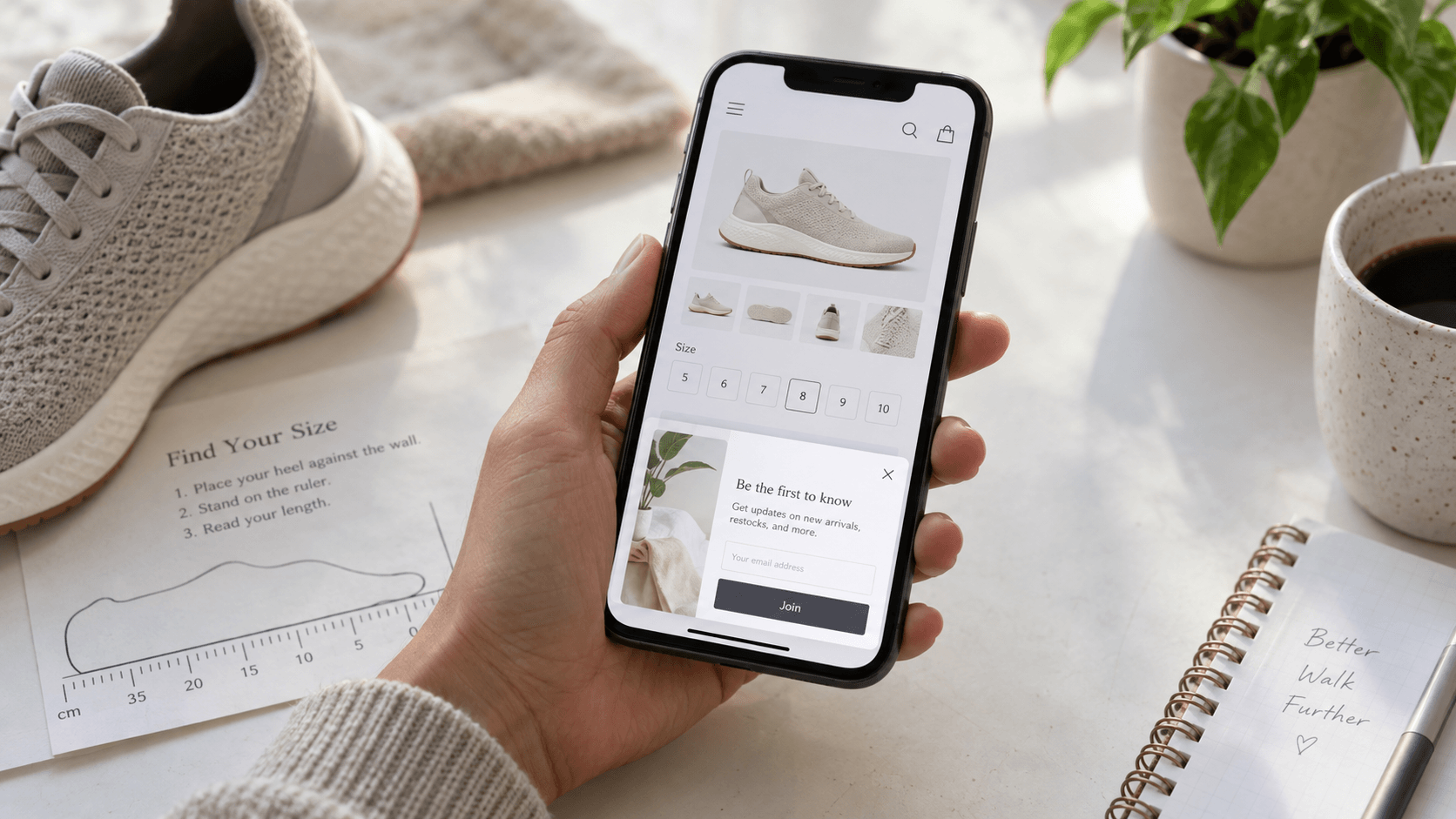
Test when a mobile popup appears, protect size selection and keyboard use, and compare outcomes with clear eligible-session and exposure counts.

Grow Your Business
Product Image SEO for Shopify: Smaller Files, Clearer Alt Text, Better Buying Context
Review product images by buying question, variant accuracy, saved-file quality and useful alt text before applying a Shopify catalog-wide optimization.