

Make relevant coupon promotions visible while shoppers browse products.
View on Shopify App Store ↗The Psychology of Free Shipping: Why Zero Can Feel Different
Separate real savings from price presentation, then test free-shipping wording while keeping the total, delivery service and eligibility unchanged.
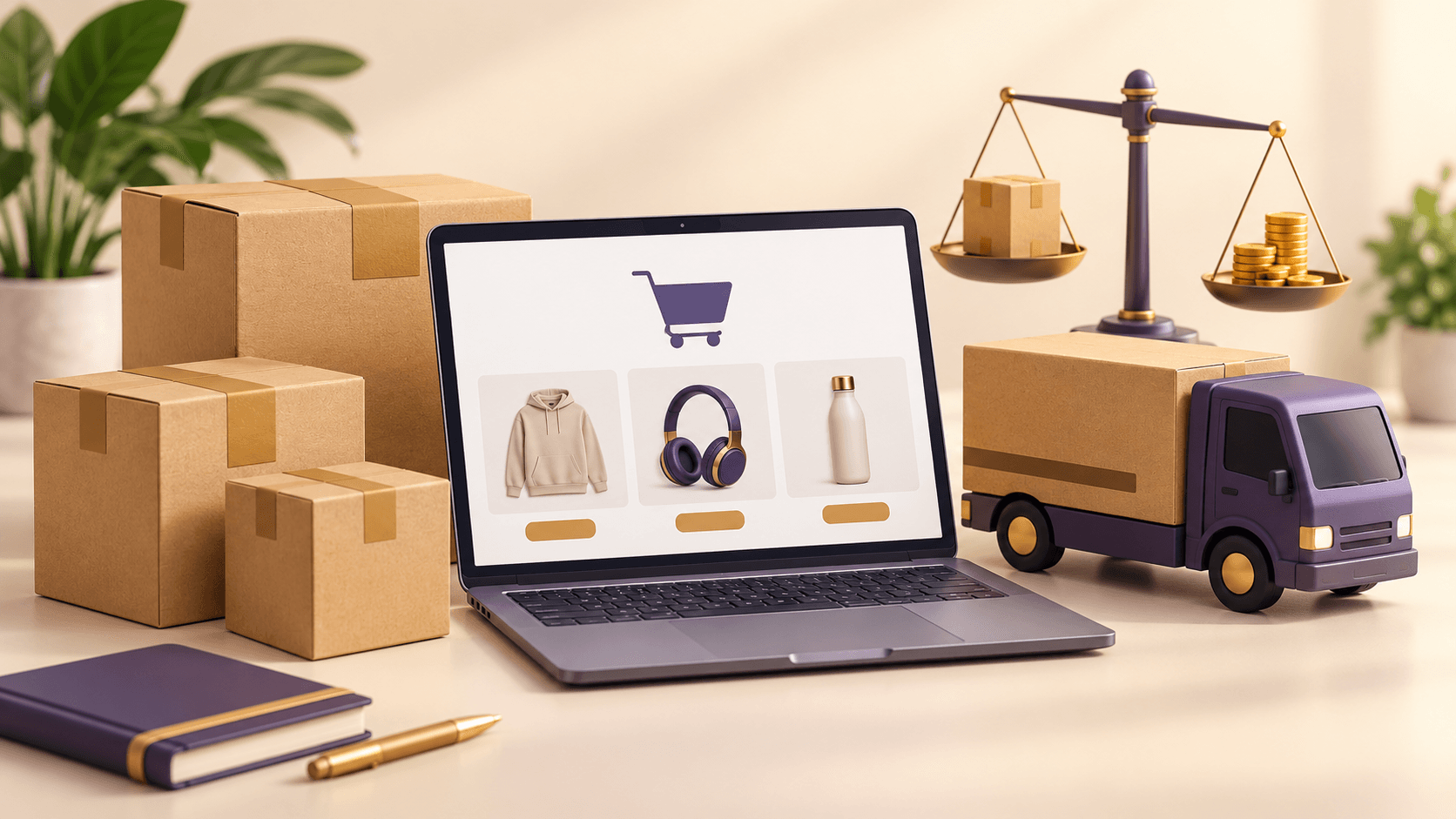
Free shipping can make an offer feel easier to accept even when it does not reduce the delivered price. The useful distinction is between a real saving, a different way of dividing the bill, and a different way of describing the same offer. Merchants need to separate those three changes before crediting a banner with faster purchases.
The word “free” deserves attention, but it is not a reliable shortcut to conversion. A shopper may welcome a clear total, distrust an unusually generous claim, or prefer a cheaper product with a separate delivery charge. Your job is to find out which explanation fits your customers without hiding the arithmetic.
What zero-price research can—and cannot—tell you
In his account of zero-price experiments, Dan Ariely describes research with Kristina Shampanier and Nina Mazar in which a free option attracted choices that involved giving up other benefits. It is a reason to investigate whether zero receives special attention, not evidence that every free-shipping message causes an instant purchase.
A free product, a waived delivery fee and a minimum-spend offer are different decisions. Shipping also involves a promised service: destination coverage, delivery speed and reliability. A customer choosing an included service may be responding to certainty rather than excitement about zero. Purchase data alone cannot identify that motive.
Treat the psychological explanation as a hypothesis with an observable implication. If a message genuinely improves clarity, shoppers should be able to explain what they will pay and which delivery service is included. If clicks increase while that understanding deteriorates, calling the message persuasive misses an important problem.
The same total can tell two different stories
Consider an illustrative desk lamp. Offer A lists the lamp at $36 with $4 standard delivery. Offer B lists it at $40 with standard delivery included. Both cost $40 before tax for the same eligible address. Neither is cheaper in this comparison, and the parcel still costs the merchant money to send.
A customer might prefer B because the full price is visible in one place. Another might prefer A because the lower product price feels more competitive or the delivery charge seems reasonable. These are possible interpretations, not predictions about how most shoppers behave.
This comparison changes the product price as well as the delivery line. It is therefore not a clean test of the word “free.” Even with an identical total, differences could reflect price comparison habits or how the product's value is judged. Do not describe a result from these two offers as proof that one word caused it.
There is also a separate basket-expansion question: whether someone adds an unwanted item to qualify. Our article on why customers add items to get free shipping examines that spending trade-off. Here, keep the product and quantity unchanged so the presentation question remains clear.
Test wording while keeping the offer constant
For a narrower test, keep the lamp at $40 with the same included standard delivery in both versions. Compare “Free standard delivery” with “Standard delivery included.” Display the same total, destination restriction, delivery estimate and tax explanation beside each version. Neither version should imply that express delivery or return postage is included.
Use the same page location, type size and visual emphasis. Changing the headline, banner color, placement and checkout rule together would test a package of changes, not wording alone. Keep product availability and other promotions consistent, and check that both mobile layouts expose the conditions without an extra hunt.
Randomly assign eligible visitors where your testing setup supports it, keeping each visitor's version stable. Define eligibility before assignment—for example, visitors whose delivery destination is already known to qualify. Do not exclude shoppers after seeing whether they bought. Decide the main outcome, observation period and evidence needed before looking for a winner.
If traffic is too low for a useful comparison, use moderated comprehension sessions first. Ask participants what they expect to pay, what delivery they expect and what remains uncertain. Those sessions can reveal misunderstandings; they do not estimate a conversion uplift. Avoid turning a handful of favorable comments into a performance claim.
Keep the promise aligned with checkout
A message experiment is not useful when one version promises a service the checkout does not provide. Shopify's free-shipping discount documentation describes code-based and automatic discounts with conditions, including country selection and minimum-purchase requirements. A display message does not itself configure those conditions.
A Shopify Community discussion about unexpected shipping charges illustrates why this matters: a merchant reported charges despite an expected threshold, and the reply first asked whether the offer used a discount or a shipping rate. It is an individual support report, not evidence of a platform-wide defect or a measured customer response.
Before testing, verify the actual destination, selected service and final order summary for each version. When the destination is unknown, communicate the eligible area instead of stating that every shopper already qualifies. Keep exceptions visible wherever the main claim appears.
For a campaign that genuinely uses a coupon, Eggflow Instant Upsell describes clickable coupon banners and control over their appearance. That can support communicating an applicable promotion. It does not establish that the app sets all shipping eligibility or provides the random-assignment experiment described here. Confirm those capabilities separately; an included-delivery offer needs no extra coupon just to use a banner.
Judge understanding and completed orders together
Choose completed purchases per assigned eligible visitor as one possible primary outcome. Keep the denominator consistent across versions. Check cancellations, delivery-related support contacts and eventual returns before treating an early difference as durable. Time to purchase can be a secondary observation; faster is not automatically better.
For example, suppose an illustrative test shows more cart clicks for “Free standard delivery,” but shoppers repeatedly ask whether express shipping is also free. That is a reason to revise the wording and inspect the completed-order results, not announce a successful psychological trigger. No numerical uplift is implied by this example.
Review business costs as well as customer behavior. More completed orders can still leave less contribution if the orders concentrate in expensive delivery destinations. The operational calculations belong in our free-shipping guide for dropshipping; use the same cost definition when comparing your test groups.
A defensible decision connects three observations: customers understand the total, checkout delivers the advertised service, and completed orders support the business objective. Keep a simpler explanation when results are inconclusive. The goal is a confident purchase, not merely a quick reaction to the word “free.”
Sources checked November 3, 2026. Prices and test scenarios are illustrative. The feature image is a reused editorial illustration of online shopping and delivery costs.
Apps in this guide
Keep exploring
All stories ↗Conversion Rate Optimization (CRO)
Why Customers Add Items to Get Free Shipping
Compare the extra spend with the value of an added item, understand possible customer motivations, and test free-shipping messages without hiding the total.
Eggflow Updates
What’s New in Smart Pop: Redesigned Popups, Link & Display Fixes, and Vendoria.net Integration
Discover what is new in Smart Pop: modernized layouts across all 4 popup and banner types, fixes for display and CTA link redirect issues, and automatic popup rendering on your store and product pages on Vendoria.net.
Conversion Rate Optimization (CRO)
How to Attract New Customers with a Free Dessert Tray Promotion on Shopify
Learn how to set up a free dessert tray promotion for first-time customers on your Shopify store. This guide provides step-by-step instructions to help catering companies attract new customers and…