A dropshipping niche is a specific group of customers with a shared problem, preference, or buying occasion. Choosing one helps you decide which products belong in your store, what your content should explain, and which promises your suppliers must support.
Start with a customer you can understand and reach. Then test demand, differentiation, order economics, and delivery. A popular product can attract attention and still be a poor business if shipping costs or customer acquisition consume the margin. This guide gives you a practical way to shortlist opportunities before committing to a large catalog.
1. Define a customer and a problem
“Home accessories” is a category. “Compact desk organization for people working in small apartments” is a niche hypothesis. The second description suggests a customer, a constraint, and a reason to buy. It also gives you specific questions to investigate: desk dimensions, cable clutter, storage space, appearance, and installation.
Write one sentence: We help [customer] solve [problem] with [product approach], supported by [credible reason to trust us]. Treat every part as a hypothesis until you have evidence. Your personal interests can make research easier, but they do not establish willingness to pay.
- Customer: Who experiences the problem, and in which country will you initially sell?
- Problem: What do they currently use, and what disappoints them?
- Purchase trigger: Moving home, replacing a broken item, starting a hobby, or another concrete occasion?
- Reach: Which search queries, creators, communities, or existing audiences could introduce your store?
- Expansion: Which related products would serve the same customer without making the catalog confusing?
Choose three candidate niches for comparison. Keep the initial scope small enough to explain clearly, while leaving room for a coherent product line. There is no universal audience-size requirement that makes a niche viable.
2. Look for several independent demand signals
Compare search interest over multiple years and a recent period in your target market. Google Trends reports normalized relative interest on a 0–100 scale; it does not report absolute demand or sales. A spike is a question to investigate, not proof of a winning product.
Source: Google Trends data and normalization
Next, read current customer reviews and questions across several competing stores or marketplaces. Record recurring problems in customers’ own words, with dates and links. Separate complaints about the product from complaints about a particular seller. A broken clasp may suggest a quality requirement; a late parcel may suggest a fulfillment requirement.
Marketplace order counts and social video views can support research, but neither tells you what a new store can profitably sell. Ask potential customers how they solved the problem last time, what they paid, and which alternatives they considered. Responses about past behavior are more useful than a casual promise to buy someday.
Create a simple evidence sheet for each candidate: observation, source, date, target market, interpretation, and remaining uncertainty. For example, repeated requests for compact dimensions could support a size-focused offer. They would not yet establish the price customers will accept.
3. Find a reason to choose your store
Search for competing offers as a customer would. Compare the complete offer: product specifications, photographs, delivered price, delivery promise, return terms, and explanation of who the item suits. Include local alternatives. A customer can prefer a familiar retailer even when your supplier’s item looks different.
Your advantage should be demonstrable. For a desk organization hypothesis, that might mean sample-tested dimensions, clear compatibility photos, a useful setup guide, and a small collection that fits together. Simply adding a logo to the same supplier images leaves the central buying question unanswered.
A higher price can work when customers see a credible benefit and the economics support it. A small SKU count can help you inspect samples and write better product pages. Neither a high price nor a low SKU count guarantees sustained growth. Start with a manageable collection and expand when customer evidence supports the next product.
Avoid treating entire categories as automatically saturated or automatically profitable. Evaluate the specific audience and offer. Competition can indicate that people spend money, while also raising the standard your store must meet.
4. Calculate contribution before choosing the niche
Build an order model using supplier quotes for your destination country. Include product cost, shipping, transaction costs, expected refunds or replacements, and the cost of acquiring a customer. Also account for duties or taxes you bear. These vary by market and arrangement, so use your own applicable amounts.
Contribution after advertising = net sales revenue − product cost − merchant-paid shipping − variable transaction costs − expected service and return costs − customer acquisition cost.
Here is a hypothetical illustration, not an Eggflow benchmark or a forecast. Assume taxes collected for remittance are excluded from the $45 revenue figure, and the merchant has no additional duties in this example:
- Net sales revenue: $45.00.
- Product cost: $15.00; merchant-paid shipping: $7.00.
- Variable transaction costs: $1.80; expected service and return allowance: $2.00.
- Contribution before advertising: $19.20.
- Assumed acquisition cost: $12.00.
- Contribution after advertising: $7.20, before fixed overhead and any other unmodeled costs.
With the other assumptions unchanged, a $5 discount leaves $2.20. If acquisition instead rises from $12 to $18, contribution falls to $1.20 without a discount. That is why revenue alone is an incomplete success metric. Recalculate with realistic combinations of discounts, delivery costs, returns, and acquisition costs before scaling.
In this simplified model, $19.20 is the maximum acquisition cost before order contribution reaches zero. Your working limit should be lower to leave room for overhead and a buffer. Include repeat purchases only when observed customer behavior supports them; an imagined lifetime value should not rescue an unprofitable first-order plan.
Related guide: Free shipping for dropshipping without losing your margin
5. Make supplier capability a niche requirement
Dropshipping reduces the need to hold inventory, but it limits direct control over quality and packaging. Orders involving several suppliers may also incur separate shipping costs and arrive in separate parcels. These operational constraints can change which niche and bundle make sense.
Source: Shopify’s benefits and drawbacks of dropshipping
A Shopify Community discussion started in February 2026 illustrates the point. A clothing merchant wanted sewn-in brand labels, suitable sizing, good fabric quality, single-item ordering, and affordable delivery to Europe, ideally within seven days. This is one merchant’s request, not proof that suppliers can meet it. It shows how a branding idea becomes a set of fulfillment conditions.
Merchant example: Dropshipping suppliers with brand label service
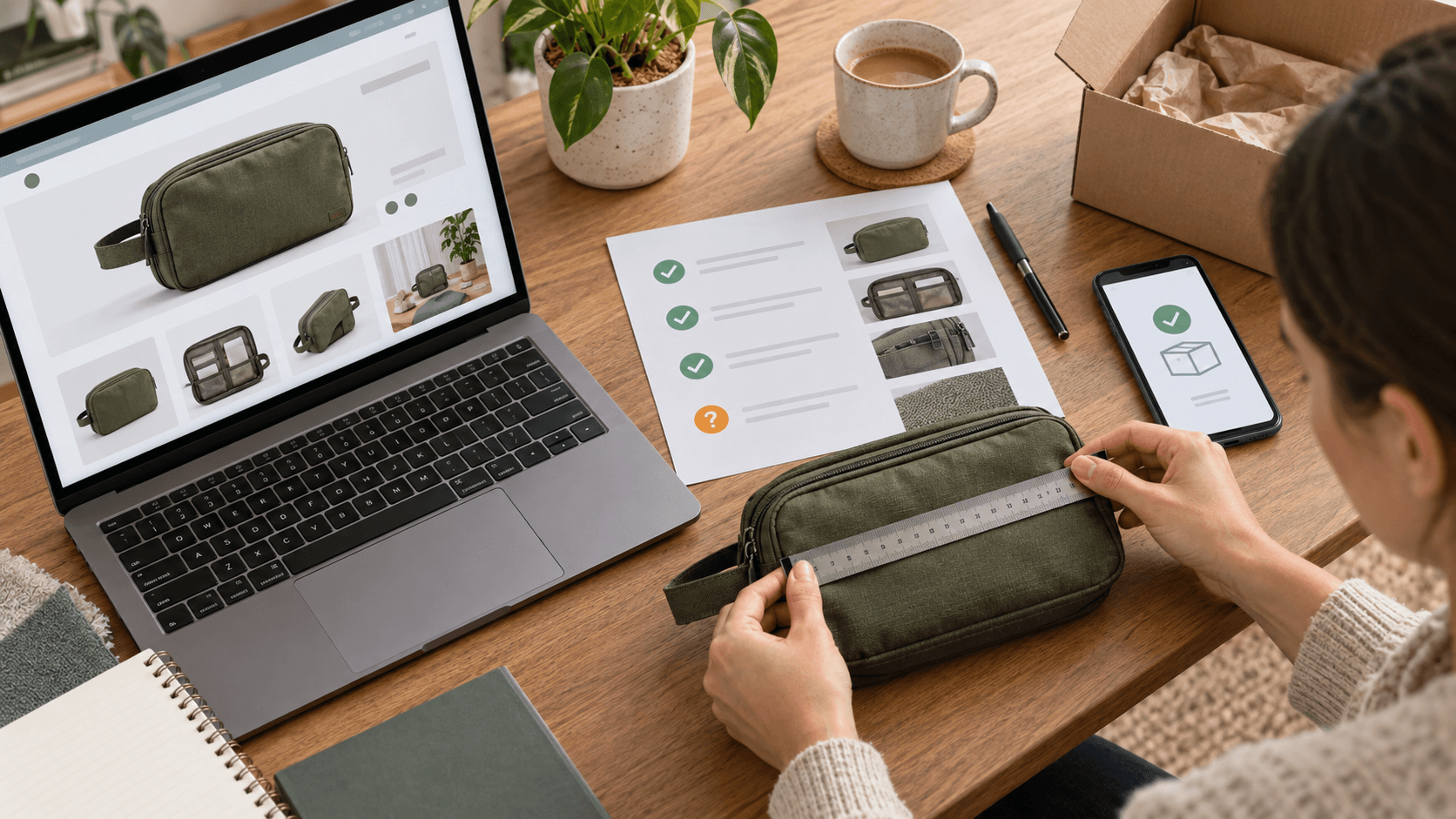
- Order samples before claiming product quality, dimensions, or packaging.
- Test a delivery route representative of your intended market and record processing and transit separately.
- Ask how tracking, stock changes, incorrect items, damage, returns, and replacements are handled.
- Confirm whether a bundle ships together and what happens when one component is unavailable.
- Check any required product documentation and your permission to use images or branding before offering the item.
A single successful sample shipment does not establish a reliable delivery range. Continue measuring actual orders and publish a promise you can support. Seasonal products need an additional check: will a typical order arrive before the customer’s occasion?
6. Use a shortlist scorecard with clear stopping rules
The following is an editorial worksheet, not a validated profitability model. Score each dimension from 0 to 2: 0 means unsupported or unacceptable, 1 means plausible with important gaps, and 2 means supported enough for a limited test. Add a note explaining the evidence behind every score.
- Demand: Several relevant signals show the customer problem, beyond one viral post.
- Reach: You can name and test a realistic way to reach the intended customer.
- Differentiation: Your benefit is visible and can be demonstrated.
- Economics: Conservative cost assumptions leave room for acquisition and overhead.
- Fulfillment: Samples and supplier terms support the promised experience.
- Execution: You can answer customers’ questions and produce useful, accurate product content.
Compare candidates by both their scores and their unresolved questions. An unacceptable safety issue, missing required documentation, an unworkable delivery promise, or consistently negative contribution is a stop condition even if the total score looks attractive. Do not let an average hide a deal breaker.
For example, compact desk accessories might be easier to demonstrate than fragile decorative items, but that remains a hypothesis until you inspect samples and cost the delivery. Score the actual products and route, rather than declaring the whole category a winner.
7. Run a bounded test and record the decision
Use the first research week to compare candidates, interview customers, request supplier details, calculate costs, and order samples. This is a research schedule; it does not assume samples will arrive within a week. Wait for the checks needed to support your claims before accepting orders.
For the strongest candidate, prepare a small collection with original sample photos, precise specifications, delivery information, and a clear explanation of the customer problem. Set a test budget you can afford, a contribution target, and a review date before launching traffic.
Track qualified visits, product interest, checkout progression, purchases, acquisition cost, contribution, and delivery outcomes. Keep the channel and offer changes documented so you can interpret the results. A small test with no sales is inconclusive about the entire niche; it can still identify a weak offer or the wrong audience.
Decide whether to continue, revise, or stop using the observed evidence. Favor improved order contribution and a dependable customer experience over adding products just to make the catalog larger.
Frequently asked questions
What is the best dropshipping niche for beginners? There is no universal best niche. A practical starting point is a customer problem you understand, a reachable audience, a demonstrable product benefit, and suppliers whose costs and delivery you can verify.
Should I choose evergreen or seasonal products? Evergreen demand can simplify planning, while seasonal products can fit a clear buying occasion. For seasonal offers, account for delivery cutoffs, post-season demand, and campaign timing. Neither approach removes the need to test the economics.
How many products should I launch with? Start with the number you can inspect and explain well. A few complementary products can be sufficient for a focused test. Adding unrelated items makes it harder to learn which customer problem your store solves.
Can I build a brand while dropshipping? Yes, but branding depends on the experience you can consistently deliver: product quality, useful content, honest promises, and support. Verify packaging and label services with your supplier before presenting them as part of your offer.
Your next step
Write three niche hypotheses, gather evidence for each, and calculate one conservative order model. Choose the candidate with the clearest customer benefit and the fewest unresolved operational risks. Then launch a limited test and let customer behavior guide the next decision.
Continue reading: How to dropship on Shopify — a practical beginner’s launch guide